

Houston’s long, hot, and humid summers mean that air conditioning isn’t a luxury; it’s a necessity that runs for much of the year. For homeowners considering a new build, this climate reality translates directly into high utility bills unless energy efficiency is a top priority from the start. Understanding which upgrades offer a real return on investment versus those that are just expensive add-ons can be confusing, as builders often present a dizzying array of options. Making the wrong choices can lead to decades of unnecessarily high energy costs. In this blog post, Houston real estate expert Chris Schmidt discusses which new build energy efficiency features provide the greatest savings in Houston’s unique climate.
Key Takeaways
- High-efficiency HVAC systems (16+ SEER2) provide the fastest and most significant payback due to Houston’s 8-9 month cooling season
- Spray foam insulation in the attic offers superior humidity control and creates an air seal that dramatically reduces energy loss
- Low-E windows with a low SHGC rating are critical for blocking solar heat gain, especially from intense west-facing afternoon sun
- Combining features strategically (HVAC, insulation, and windows) multiplies savings far beyond what any single upgrade can achieve
The new build energy efficiency features that provide the greatest savings for Houston homes are high-efficiency HVAC systems (16+ SEER2), comprehensive attic insulation like spray foam (R-49+), and Low-E windows with a low Solar Heat Gain Coefficient (SHGC ≤0.25). These elements directly combat Houston’s intense heat and humidity, which are the primary drivers of high utility bills. Strategically combining these features can reduce annual cooling costs by 30-40% compared to homes with standard, builder-grade installations.
To Discuss Your Home Sale or Purchase, Call or Text Today and Start Packing!
With nearly two decades of experience, Chris Schmidt has guided hundreds of Houston homebuyers through new construction purchases, helping them evaluate builder energy packages to avoid long-term utility burdens. His team researches local contractor pricing and CenterPoint Energy programs to provide clients with unbiased comparisons that builders often don’t. This expertise ensures buyers understand the true cost of ownership before signing a contract.
Buying a New Build? Get Expert Representation at Zero Cost. In Texas, builders pay the Realtor’s commission, meaning you get Chris Schmidt’s expert negotiation and oversight for FREE. Don’t go to the sales office alone—protect your interests today. Call Chris Schmidt Today at 713-322-5604!
Houston New Build Energy Efficiency Cost & ROI Calculator (2025)
| Feature | Standard Cost | Premium Cost | Annual Savings | Payback Period | CenterPoint Rebate | Federal Tax Credit |
|---|---|---|---|---|---|---|
| High-Efficiency HVAC (16 SEER2) | Builder Grade (14 SEER2) | ~$3,000 Upgrade | $250 – $400 |
~9.5 Years
|
Varies | Up to 30% |
| Spray Foam Insulation | Fiberglass Batts | ~$4,500 Upgrade | $180 – $300 |
~14 Years
|
N/A | Up to 30% |
| Low-E Windows | Builder Grade | ~$7,000 Upgrade | $120 – $200 |
20+ Years
|
N/A | Up to 30% |
| Solar Panels | N/A | ~$20,000 System | $1,200 – $1,800 |
~12.5 Years
|
Net Metering | 30% |
| Radiant Barrier | N/A | ~$1,500 Install | ~$100 |
~15 Years
|
N/A | Up to 30% |
| Tankless Water Heater | Standard Tank | ~$2,000 Upgrade | ~$85 |
20+ Years
|
Varies | Up to 30% |
Energy Efficiency FAQ
For Houston’s hot and humid climate, a SEER2 rating of 16 is widely considered the “sweet spot” for balancing upfront cost with long-term energy savings. While the minimum requirement is 14 SEER2, upgrading to a 16 SEER2 unit can reduce annual cooling costs by $250-$400. Systems with ratings of 18 SEER2 or higher offer even greater savings but come with a significantly higher initial investment.
High-Efficiency HVAC Systems: Houston’s #1 Energy Saver
In a city where air conditioners run for the better part of the year, the efficiency of your HVAC system is the single most important factor for long-term savings. Consequently, high-efficiency systems rated 16 SEER2 or higher can save Houston homeowners $250-$400 annually compared to the standard 14 SEER2 units often found in base-level new builds. While the upfront cost is higher, the payback period is typically between 8-12 years, making it a sound financial investment.
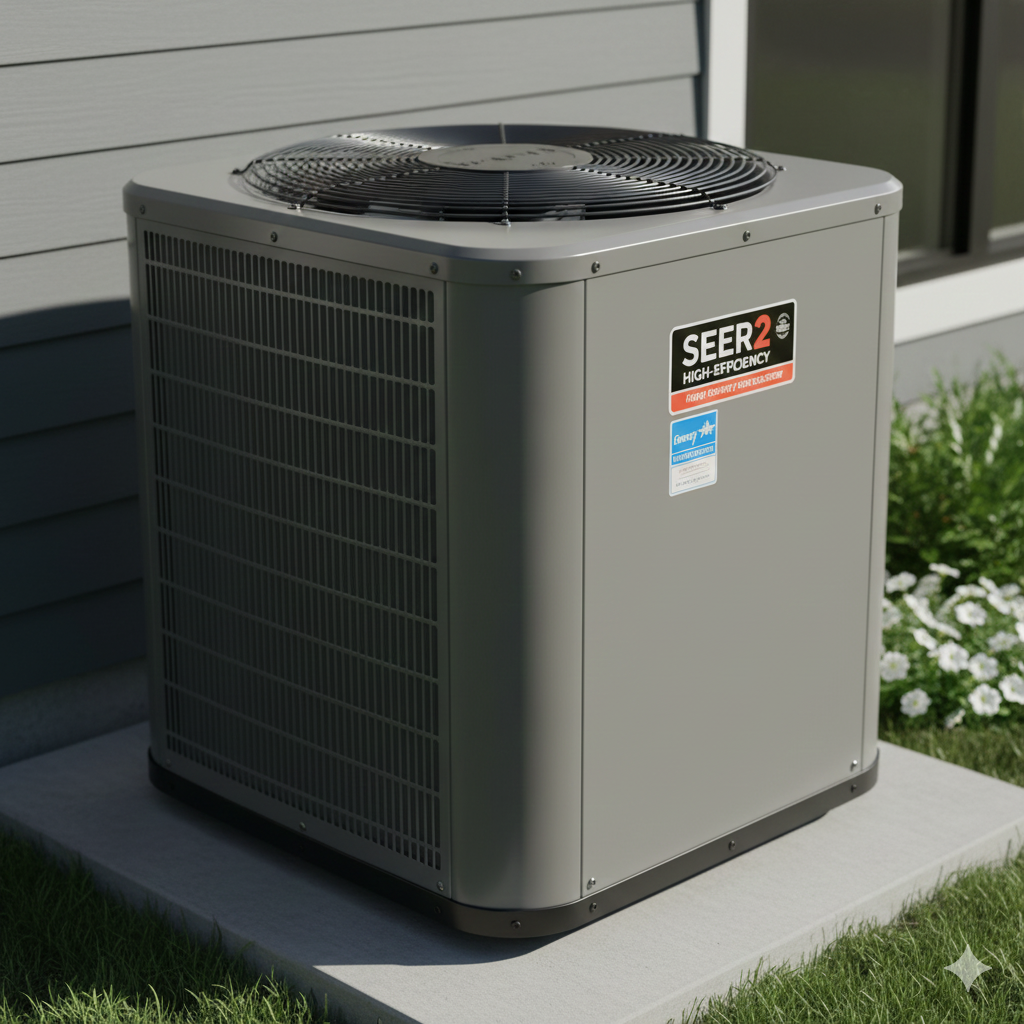
The key is understanding the modern SEER2 (Seasonal Energy Efficiency Ratio 2) rating, which better reflects real-world performance. Essentially, a higher SEER2 number means the unit uses less energy to produce the same amount of cooling. Given Houston’s climate, investing in a more efficient system directly translates to lower monthly bills from CenterPoint Energy. Therefore, it is a crucial part of any energy-saving strategy when buying a home.
Properly sizing the unit is just as important as its efficiency rating. For instance, an oversized system will cool the house too quickly without removing humidity, leading to a cold and clammy feeling. A professional Manual J load calculation ensures the unit is perfectly matched to the home’s square footage, insulation, and window layout.
Common SEER2 options include:
- 14 SEER2 (Standard): Typically included by builders, meeting minimum requirements but offering lower long-term savings
- 16 SEER2 (Recommended): The sweet spot for cost and efficiency, providing significant savings with a reasonable payback period
- 18+ SEER2 (Premium): Delivers the highest savings but comes with a much larger upfront cost, extending the payback period
Spray Foam Insulation: Is It Worth the Investment in Houston?
Insulation is your home’s thermal shield, and in Houston’s hot and humid climate, spray foam insulation provides superior performance compared to traditional fiberglass. Additionally, it not only has a high R-value (a measure of thermal resistance) but also creates an air seal that prevents conditioned air from escaping and humid outdoor air from entering. This air-sealing quality is critical for controlling indoor humidity, a major comfort and energy challenge in the region.
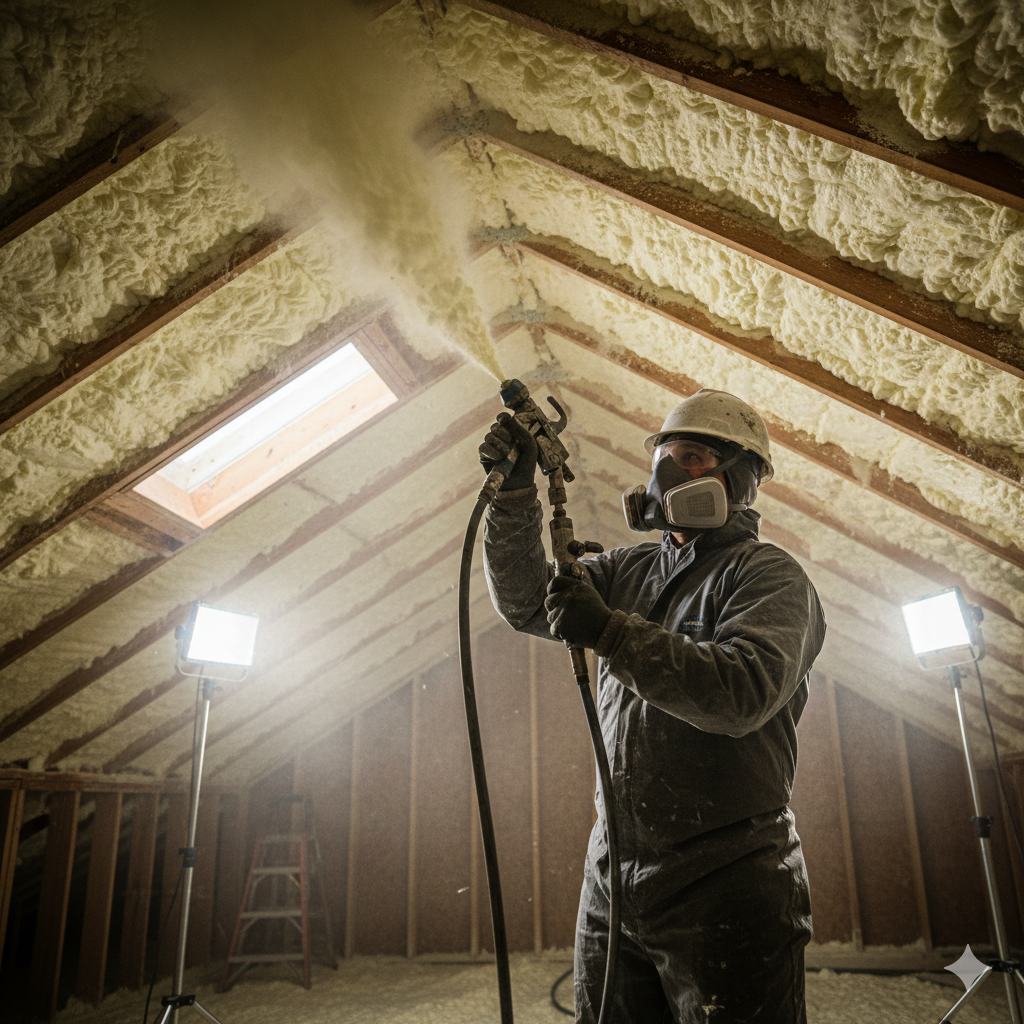
While spray foam costs significantly more upfront than fiberglass, it can reduce cooling costs by an additional $180-$300 per year. As a result, the investment often pays for itself in 12-16 years through energy savings and improved home comfort. Harris County building codes require a minimum of R-38 insulation in attics, but many high-performance builders in communities like The Woodlands and Katy are now using R-49 or higher to deliver even greater efficiency.
“I often see buyers focus on cosmetic upgrades and overlook the insulation package. In Houston, upgrading from standard fiberglass to spray foam is one of the smartest long-term investments you can make. It not only lowers your bills but makes the entire home more comfortable by controlling humidity.” – Chris Schmidt
Choosing the right type of insulation is a key decision when planning to sell your house, as it can be a major selling point. For buyers, it means a lower total cost of ownership over the life of the home.
Understanding Your Insulation Options
When evaluating insulation packages from builders, you’ll encounter several options with different performance characteristics:
- Fiberglass Batts (R-38): The standard, most affordable option that provides good thermal resistance but does not stop air leakage
- Open-Cell Spray Foam: A great upgrade that creates an excellent air seal and offers better sound dampening
- Closed-Cell Spray Foam: The premium choice that acts as an air and vapor barrier, making it ideal for the Gulf Coast’s high humidity
Low-E Windows and Solar Heat Gain Control
Windows can be a major source of heat gain, especially in a sunny climate like Houston’s. Therefore, energy-efficient windows feature Low-E (low-emissivity) coatings that reflect infrared heat while allowing visible light to pass through. This technology is essential for keeping your home cool without making it dark. Furthermore, the most important metric for Houston is the Solar Heat Gain Coefficient (SHGC), which measures how much solar radiation a window allows in.
A lower SHGC number means less heat is entering the home, reducing the load on your air conditioner. For the Houston real estate market, an SHGC of 0.25 or lower is recommended, particularly for windows facing west or south. While upgrading to premium windows can add thousands to the cost of a new build, they can reduce annual cooling costs by $120-$200 and also protect furniture and flooring from UV damage.
When reviewing a builder’s specifications, pay close attention to the NFRC label on the windows. This label provides verified U-Factor (how well the window insulates) and SHGC ratings. Additionally, a top realtor in Houston can help you decipher these technical details and compare the window packages offered by different builders.
Solar Panels in Houston: A Complete ROI Analysis
With abundant sunshine, Houston is a prime location for solar energy. Installing solar panels on a new build can significantly reduce or even eliminate your electricity bill, offering savings of $1,200-$1,800 annually. Thanks to a 30% federal tax credit, the payback period for a typical residential system is around 10-15 years. Consequently, this makes solar a viable option for homeowners planning to stay in their homes for the long term.
However, there are Houston-specific factors to consider before investing. For instance, the risk of hurricanes and hail means robust installation and proper insurance are crucial. Additionally, homeowners must navigate CenterPoint Energy’s net metering policies and any restrictions imposed by their community’s Homeowners Association (HOA). Fortunately, the Texas Solar Rights Act prevents HOAs from outright banning panels, though they can enforce reasonable aesthetic guidelines.
A typical 7kW system for a 2,500-square-foot home costs between $18,000 and $22,000 before the federal tax credit. This investment not only lowers bills but also increases your home’s value without increasing your property taxes. Getting an accurate home valuation that accounts for solar can be complex, so working with an experienced agent is key.
Maximizing Savings: Houston Rebates and Federal Tax Credits
Homebuyers can significantly offset the cost of energy-efficient upgrades by taking advantage of available rebates and tax credits. The most substantial incentive is the federal Energy Efficient Home Improvement Credit, which was expanded by the Inflation Reduction Act. Specifically, this provides a tax credit for 30% of the cost of qualifying upgrades, including insulation, windows, and high-efficiency HVAC systems.

Locally, utility provider CenterPoint Energy often offers rebates for installing high-efficiency equipment and smart thermostats. These programs change periodically, so it is important to check for current offers. Moreover, the key is to “stack” these incentives. For example, a homeowner can often claim a federal tax credit and a CenterPoint rebate for the same new HVAC system, maximizing their total savings.
Navigating the paperwork and eligibility requirements can be complex. Therefore, consulting with a real estate professional who is knowledgeable about these programs can ensure you don’t leave money on the table. For some, exploring options like cash home buyers is about financial certainty, and locking in energy savings provides a similar long-term financial benefit.
Key incentives available to Houston homeowners include:
- Federal Tax Credits: 30% of the cost for qualifying windows, insulation, HVAC, and solar panels
- CenterPoint Energy Rebates: Monetary rebates for specific high-SEER2 HVAC systems and approved smart thermostats
- Builder Incentives: Some builders in the Greater Houston area offer their own promotions for energy-efficient packages
Why Choose Chris Schmidt to Find Your Energy-Efficient Home
Navigating the new construction market in Houston requires an expert who understands not just floor plans and finishes, but the long-term cost of ownership. Chris Schmidt and his team at Your Home Sold Guaranteed Realty - Chris Schmidt Team specialize in helping buyers analyze builder specifications to find a home that is both beautiful and affordable to operate. With nearly two decades of experience, he provides the unbiased, data-driven advice needed to make smart decisions on energy-efficient features.

The team’s deep knowledge of local builders, from Katy to Kingwood, allows them to compare energy packages objectively—something a builder’s sales agent cannot do. Backed by hundreds of 5 Star Google reviews, their commitment is to the buyer’s best interest. They help clients understand the real-world savings of a 16 SEER2 HVAC system or the humidity-control benefits of spray foam, ensuring you get the most value for your investment.
“Our goal is to ensure our clients love their home not just on move-in day, but five years down the road when they see how manageable their utility bills are. We dig into the technical details so they can make an informed choice that benefits their family for years to come.” – Chris Schmidt
With unique programs like the “You Will Love Your New Home or I’ll Buy It Back” Guarantee, Houston real estate expert Chris Schmidt provides complete peace of mind. To Discuss Your Home Sale or Purchase, Call or Text 713-322-5604 Today and Start Packing!
Follow Us on Social Media
Follow Chris Schmidt Team on social media for the latest Houston real estate insights, market updates, and home buying/selling tips. Connect with us on Google, YouTube, Facebook, Instagram, LinkedIn, and TikTok for exclusive content and expert guidance.
Frequently Asked Questions
What is a good SEER2 rating for a new home in Houston?
For Houston’s hot and humid climate, a SEER2 rating of 16 is widely considered the “sweet spot” for balancing upfront cost with long-term energy savings. While the minimum requirement is 14 SEER2, upgrading to a 16 SEER2 unit can reduce annual cooling costs by $250-$400. Systems with ratings of 18 SEER2 or higher offer even greater savings but come with a significantly higher initial investment, which extends the time it takes to recoup the cost. Working with the best realtor in Houston ensures you understand which SEER2 rating makes the most financial sense for your specific budget and how long you plan to stay in the home.