

Montrose isn’t just one neighborhood; it’s a collection of distinct communities masquerading under a single name, each offering a radically different living experience. For decades, it has been known as the vibrant, cultural heart of Houston—an eclectic hub of art galleries, historic bungalows, and world-class restaurants. Prospective residents are drawn to its reputation for walkability and diversity, envisioning a life less dependent on Houston’s infamous car culture. Yet, beneath the bohemian charm lie practical challenges that can catch newcomers by surprise, from relentless parking battles to the hidden costs of maintaining a century-old home. In this blog post, real estate expert Chris Schmidt discusses the pros and cons of living in Montrose, a unique and historic Houston neighborhood.
Key Takeaways
Before diving into the details, here are the essential points to understand about living in Montrose:
- It’s Not Monolithic: Montrose is comprised of at least five micro-neighborhoods, such as Hyde Park and Neartown, each with unique pricing, parking rules, and noise levels.
- Parking is a Major Factor: The neighborhood’s biggest pain point is parking, especially in the dense corridors where Resident Parking Permit (RPP) zones are strictly enforced.
- Hidden Costs Exist: Beyond the high home prices, be prepared for potential foundation repair bills ($10k-$40k) and mandatory flood insurance in certain areas.
- Walkability is Real, But Nuanced: While core areas boast Walk Scores over 90, living on a quieter interior street may still require a car for daily errands.
Living in Montrose offers unparalleled access to arts, dining, and an inclusive, LGBTQ+-friendly community atmosphere. The primary advantages are exceptional walkability, a dense concentration of cultural institutions like the Menil Collection, and a dynamic nightlife. However, the most significant cons include severe parking shortages, a higher cost of living with median home prices often exceeding $700,000, and infrastructure challenges like flood risks near Buffalo Bayou and the high potential for foundation issues in older homes.
The Pros: Why People Choose to Live in Montrose
Montrose’s appeal is undeniable, attracting residents who prioritize culture, community, and convenience over sprawling suburban lots. Its energetic, artistic vibe is woven into the very fabric of the streets, offering a lifestyle that is unique within Houston’s Inner Loop.
Unmatched Walkability and Transit Access
In a city built for cars, Montrose stands out as a pedestrian’s paradise. The Neartown area boasts a Walk Score of 95 out of 100, meaning most daily errands do not require a vehicle. Within a short walk from the central Montrose Boulevard corridor, residents can access dozens of restaurants, coffee shops, grocery stores like Whole Foods and Trader Joe’s, and countless independent shops. This level of convenience is a primary driver for those looking to reduce their commute and embrace a more active, urban lifestyle.
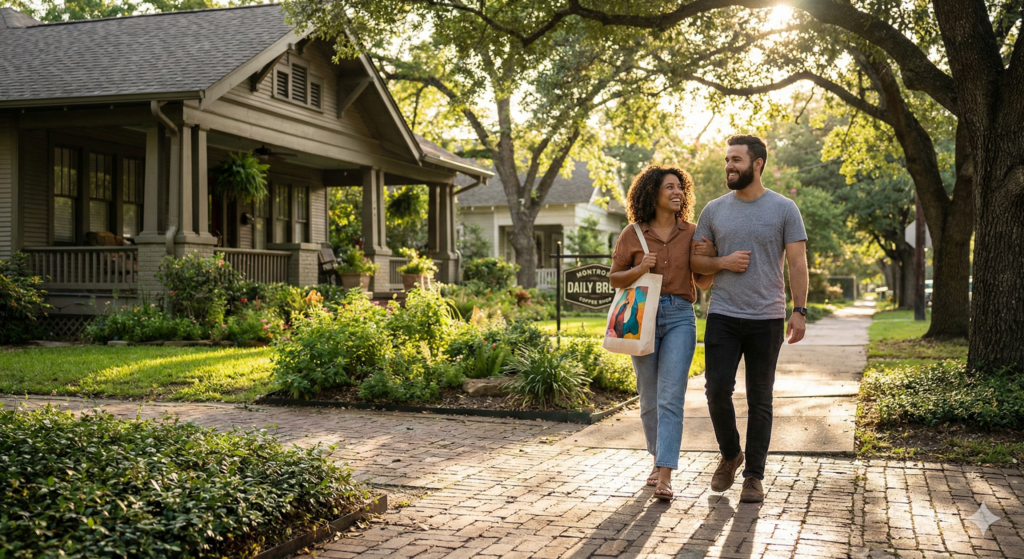
Beyond walking, the neighborhood is well-served by public transportation. Key METRO bus routes, including the 27 on Westheimer and the 82 on Shepherd, provide reliable connections to Downtown, the Texas Medical Center, and the Galleria. This accessibility makes it a practical choice for professionals working in Houston’s major employment hubs.
A Hub for Arts, Culture, and History
Montrose is the undisputed epicenter of Houston’s art scene. It is home to a dense cluster of world-renowned institutions that offer incredible cultural experiences, often just steps from your front door. The neighborhood’s commitment to the arts provides a rich and engaging environment for residents.
Key cultural landmarks include:
- The Menil Collection: A celebrated museum featuring a vast private collection, known for its surrealist and contemporary art, with free admission for all.
- Rothko Chapel: A serene, non-denominational spiritual space featuring fourteen monumental paintings by artist Mark Rothko.
- Contemporary Arts Museum Houston: Located on the edge of the Museum District, it showcases innovative regional, national, and international art.
- Gallery Row: A stretch of Colquitt Street lined with numerous commercial art galleries, hosting popular opening receptions on the first Saturday of each month.
Diverse Dining, Nightlife, and Inclusivity
The culinary landscape in Montrose is one of the most diverse and acclaimed in Texas. From James Beard-nominated restaurants like Hugo’s to iconic local favorites like Niko Niko’s, the options are endless. The nightlife is equally varied, offering everything from craft cocktail bars like Anvil Bar & Refuge to historic dive bars and vibrant LGBTQ+ establishments that have anchored the community for decades.
Historically, Montrose has been the heart of Houston’s LGBTQ+ community since the 1970s. This legacy of inclusivity continues today, fostering an open and welcoming atmosphere for all residents. The annual Houston Pride Parade often runs through the neighborhood, and community resources like The Montrose Center provide vital support, making it a place where diversity is not just accepted but celebrated.
Montrose Hotspots & Zones
Montrose Living FAQs
Like any dense urban area, crime exists, mostly property crimes like car break-ins. However, residential streets in Hyde Park and Mandell Place are generally considered very safe.
Congestion is real on major streets like Westheimer. However, commute times to Downtown or the Med Center are short compared to the suburbs.
Montrose has historically shown strong appreciation. High demand makes it stable, though entry prices and maintenance on older homes are factors to consider.
The Cons: Hidden Costs and Daily Challenges of Montrose Life
While the benefits are significant, living in Montrose comes with a set of trade-offs that prospective residents must seriously consider. These challenges are not deal-breakers for everyone, but they require a realistic budget and a certain tolerance for the quirks of dense, urban living.
The Parking Nightmare
Parking is, without question, the most consistent complaint among Montrose residents. In high-density areas like Neartown and the Westheimer corridor, the city has implemented Resident Parking Permit (RPP) zones. While a permit only costs about $20 per year, it does not guarantee a spot. On weeknights and weekends, even permit holders can spend considerable time circling the block searching for parking. Furthermore, households are limited to a small number of guest passes each year, making it difficult to host visitors. For this reason, properties with dedicated off-street parking—a driveway or garage—command a significant price premium, often adding $50,000 or more to a home’s value.
Foundation Issues and Aging Homes
Much of Montrose’s charm comes from its historic 1920s and 1930s bungalows, but these homes sit on Houston’s notoriously expansive clay soil. This soil swells when wet and shrinks when dry, causing foundations—particularly the pier-and-beam style common in the area—to shift over time. Signs of trouble include cracks in drywall, doors that no longer close properly, and uneven floors.
A professional foundation inspection is non-negotiable when buying an older Montrose home. If issues are found, repairs can be costly, typically ranging from $10,000 to $40,000 for leveling and shoring up the structure. Buyers should budget for this potential expense, as it’s a matter of “when,” not “if,” for many older properties.
Flood Risk and Insurance Costs
While much of Montrose is on relatively high ground for Houston, certain areas, particularly those bordering Buffalo Bayou, lie within FEMA-designated flood zones. Following Hurricane Harvey, flood awareness and insurance requirements have become critical factors.
Here’s what you need to know about flood risk in the area:
- Zone AE: This is the 100-year floodplain. If your home is in this zone and you have a mortgage, you will be required to carry flood insurance, which can cost anywhere from $1,200 to over $2,500 annually.
- Zone X: While considered lower risk, many properties in Zone X still experienced flooding during major weather events. Optional flood insurance here is highly recommended and typically costs $400 to $800 per year.
Understanding Montrose’s Micro-Neighborhoods
Treating Montrose as a single, uniform area is a common mistake. The neighborhood is a patchwork of smaller districts, each with its own price point, atmosphere, and lifestyle. Understanding these differences is key to finding the right fit.
Hyde Park vs. Neartown
Hyde Park, located in the northern part of Montrose, is known for its quieter, tree-lined streets and a greater number of single-family homes with driveways. It offers a more residential feel while still being walkable to the restaurants on Westheimer. In contrast, Neartown, centered around the Montrose Boulevard and Westheimer intersection, is the densest and most energetic part of the neighborhood. It has the best walkability but also the most severe parking challenges and highest noise levels due to the concentration of bars and nightlife.
Cherryhurst and Mandell Place
South of Westheimer, Cherryhurst and Mandell Place offer a balance between the quiet of Hyde Park and the energy of Neartown. These areas have a strong neighborhood feel, a mix of historic homes and modern townhomes, and are zoned to desirable elementary schools, making them popular with families. While still walkable, they are slightly removed from the late-night noise of the main corridors.
Courtlandt Place
An outlier in every sense, Courtlandt Place is a private, gated enclave of historic mansions on a single boulevard. It is one of Houston’s most exclusive and expensive addresses, with a strict homeowners’ association that preserves its unique architectural character. It offers the ultimate in privacy and security within Montrose but lacks the accessible, mixed-use feel of the surrounding areas.
| Neighborhood | Median Price | Walk Score | Parking (1-10) | Housing Type |
|---|---|---|---|---|
| Hyde Park | $850,000 | 88 | 6 | Bungalows |
| Neartown | $700,000 | 95 | 9 (Difficult) | Townhomes |
| Cherryhurst | $780,000 | 85 | 5 | Historic |
| Mandell Place | $820,000 | 83 | 5 | Single-Family |
| Courtlandt Place | $2.5M+ | 70 | 2 (Easy) | Mansions |
The Montrose Real Estate Market
The Montrose real estate market is one of Houston's most competitive and fast-moving. Its desirability keeps inventory low and prices high compared to the rest of the city. Whether you're buying or renting, it's essential to be prepared for a dynamic market.
The median sales price for a single-family home in Montrose hovers around $725,000, significantly higher than the Houston citywide median. The price per square foot can range from $250 to over $450, depending on the location and condition of the property. Homes often sell quickly, with an average of just 28 days on the market, and multiple-offer situations are common for well-maintained properties in good locations.
The rental market is equally tight, with an occupancy rate of over 95%. This high demand gives landlords the upper hand, and prices reflect it.
- Studio apartments: $1,100 - $1,500 per month
- One-bedroom apartments: $1,400 - $2,200 per month
- Two-bedroom bungalow rentals: $2,500 - $3,500 per month
- Modern three-bedroom townhomes: $3,500 - $5,000 per month
Schools and Family Life in Montrose
While often perceived as a neighborhood for singles and young professionals, many families call Montrose home. However, navigating the public school system requires careful attention. The neighborhood is split between three different Houston ISD elementary school zones, and the quality of the schools can vary.
The northern part of Montrose, including Hyde Park, is zoned to the highly-regarded Harvard Elementary. The southern portion, including Mandell Place, is typically zoned to Poe Elementary. The central Neartown area is zoned to Bonham Elementary. Because HISD boundaries can and do shift, it is absolutely critical for families to verify the current school assignment for a specific address before buying or signing a lease. In addition to public schools, the area is close to some of Houston's most prestigious private schools, including St. John's School.
About Chris Schmidt's Expertise

Navigating the nuances of Montrose requires deep local knowledge that goes beyond property listings. For over 15 years, Chris Schmidt has been a leading real estate expert specializing in Houston's Inner Loop neighborhoods. He has successfully guided hundreds of clients through the complexities of buying and selling in Montrose, from securing historic bungalows in Hyde Park to negotiating deals on modern townhomes in Neartown. His approach is built on radical transparency, leveraging granular data on flood plains, school zoning, and foundation integrity to empower clients.
Chris's analysis of the Montrose market has been recognized for its accuracy and depth, providing buyers with a clear understanding of both the opportunities and the hidden risks. By combining extensive transaction history with on-the-ground insights, he ensures every client makes an informed decision tailored to their lifestyle and financial goals.
Ready to Find Your Perfect Montrose Home?
Whether you're drawn to the cultural richness of Neartown, the quiet charm of Hyde Park, or the family-friendly appeal of Mandell Place, choosing the right property in Montrose requires expert guidance. Chris Schmidt brings over 15 years of specialized Inner Loop experience to help you navigate parking challenges, flood zones, and foundation concerns with confidence.
Contact Chris Schmidt today for a personalized consultation:
📞 Call or text: 713-322-5604
🌐 Visit: Your Home Sold Guaranteed Realty - Chris Schmidt Team
Let's find a home that matches your lifestyle and budget while avoiding the hidden pitfalls that can derail your investment.
Follow Us on Social Media
Stay updated with the latest Houston real estate trends and listings: